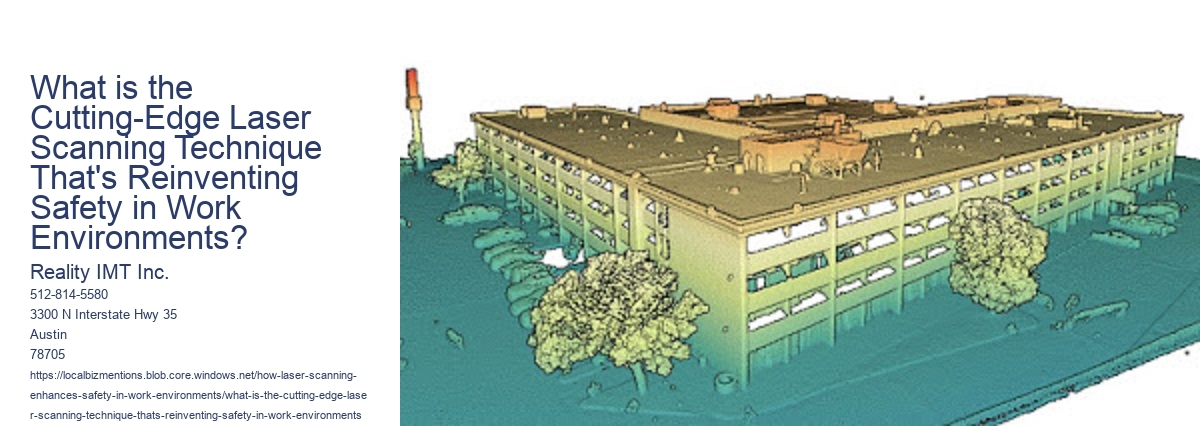
Cutting-edge laser scanning approaches are transforming the way safety is handled in numerous work environments. What is the Cutting-Edge Laser Scanning Strategy That's Revolutionizing Safety in Workplace? . As industries continuously strive for safer work environments, advanced laser scanning modern technologies go to the leading edge of this transformative movement. These advanced approaches offer thorough data acquisition, permitting detailed analysis and proactive safety measures.
Among one of the most significant improvements in this field is making use of 3D laser scanning, additionally known as LiDAR (Light Detection and Ranging). This technology utilizes laser light to properly determine and map the environments, developing extremely detailed three-dimensional representations of locations within work environments. The precision and speed at which LiDAR can survey a site make it an invaluable device for safety engineers and experts.
LiDAR's ability to capture data in real-time offers immediate insights into possible threats, such as structural weaknesses, equipment malfunctions, or dangerous conditions that may not show up to the naked eye. 3D As-Built Building Scanning Austin This approach permits the analysis of intricate settings with a level of detail that conventional surveys would certainly not capture. As a result, it offers an aggressive approach to danger recognition, making it possible for organizations to deal with issues before they bring about accidents or injuries.
In addition to fixed scanning, mobile laser scanning (MLS) is another cutting-edge method that has obtained traction in safety applications. MLS systems are mounted on moving vehicles or drones, providing the flexibility to survey huge or difficult-to-reach areas. This movement allows continuous monitoring of dynamic workplace, such as construction sites or mining procedures, where the landscape and prospective hazards are constantly changing. With MLS, safety analyses can be conducted much more often and thoroughly, guaranteeing that arising risks are identified and mitigated quickly.
Another innovative development in laser scanning is the integration of artificial intelligence (AI) and machine learning algorithms. These technologies enhance the capability of laser scanners to interpret the accumulated data, instantly recognizing possible safety issues and signaling appropriate workers. For example, AI can be trained to acknowledge patterns that represent the possibility of a structural failing or to discover deviations from safety methods by evaluating workers' movements and behaviors.
Moreover, augmented reality (AR) and virtual reality (VR) are being combined with laser scanning to produce immersive safety training programs. By replicating real-world scenarios within a regulated digital environment, workers can exercise replying to emergency situations or navigating harmful situations without any risk of injury. This approach of training is especially valuable in preparing employees for risky tasks and making certain that they are equipped with the knowledge and experience to handle prospective threats.
Finally, cutting-edge laser scanning methods like LiDAR, MLS
In the ever-evolving landscape of office safety, cutting-edge innovations are continually established to shield workers and assets from possible hazards. Among these innovations, laser scanners have become a game-changer in numerous workplace, boosting safety methods and reducing risks with unparalleled precision.
Laser scanners function by discharging a laser light beam that sweeps across a location to capture its exact form and measurements in real-time. This process develops a detailed three-dimensional representation of the environment, referred to as a point cloud. These high-resolution pictures enable detailed analysis and assessment of offices, recognizing prospective threats that might not show up to the human eye.
One of the most substantial advantages of laser scanning is its capacity to run in unsafe or unattainable locations. For example, in the construction industry, laser scanners can examine the security of frameworks or discover minute deformations that could lead to structural failure, all without the demand for employees to literally access possibly hazardous websites. This remote ability not only maintains workers safe however likewise saves time and minimizes the possibility of crashes triggered by human mistake.
In manufacturing, laser scanners play a crucial duty in guaranteeing machinery and robotic systems operate within their assigned boundaries. By setting up a virtual safety zone around equipment, the scanners can instantaneously detect any invasion by personnel or objects and activate an immediate closure of equipment. This proactive strategy prevents mishaps and injuries, specifically in environments where hefty equipment runs in close proximity to human workers.
In addition, laser scanners have revolutionized safety in the mining industry. They are utilized in underground tunnels to monitor the integrity of the mine shafts, anticipating collapses or collapses prior to they happen. The real-time data provided by laser scanners permits prompt discharge and intervention, substantially boosting the safety of miners.
One more cutting-edge application of laser scanning remains in the area of emergency response. First -responders can use laser scanners to rapidly examine the security of buildings adhering to catastrophes such as quakes, fires, or surges. This information assists them make informed choices about the safety of going into a framework to perform rescue operations, guaranteeing that they do not put themselves in undue threat.
In the realm of transportation, laser scanners add to the safety of both employees and the public. As an example, in railway maintenance, scanners can find track irregularities or mistakes that can bring about derailments. By recognizing these issues early, maintenance can be performed prior to they posture a significant risk.
The cutting-edge nature of laser scanning lies in its continuous renovation and integration with other modern technologies like artificial intelligence (AI) and the Internet of Things (IoT). AI algorithms can
In the ever-evolving landscape of work environment safety, cutting-edge laser scanning methods are emerging as game-changers. These advanced innovations are not only improving the method we perceive and interact with our setting however are additionally setting brand-new requirements for safety throughout various markets. This essay will certainly delve into real-world applications of laser scanning, highlighting its transformative impact on safety in workplace.
Laser scanning, also called LiDAR (Light Detection and Ranging), uses laser light to exactly gauge distances and produce high-resolution maps of objects and settings. This technology records thorough three-dimensional information regarding the forms and surface areas of things and spaces, which can be used to create digital twins, or digital models, of physical rooms. These digital representations are vital devices for safety planning and assessment.
One striking study comes from the construction industry, where laser scanning has actually revolutionized safety protocols. Standard methods of surveying construction sites are often taxing and can present dangers to surveyors who have to navigate dangerous terrain or structures. With laser scanning, however, comprehensive data can be gathered rapidly and without the demand for physical presence in hazardous areas. This data can after that be utilized to identify possible risks, such as weak frameworks or areas susceptible to accidents, enabling preemptive procedures to be taken. Additionally, the digital twin of a construction site makes it possible for task supervisors to plan the logistics of moving heavy equipment and materials a lot more securely and efficiently.
An additional engaging application of laser scanning is in the field of emergency response. In case of a disaster, such as an earthquake or a fire, initial -responders can use laser scanning to draw up influenced locations with excellent accuracy. This information confirms crucial for navigating particles, locating victims, and understanding the structural integrity of buildings. 3D Scan Measurement Near Me Having a comprehensive 3D map of the area assists emergency teams to plan their operations, focus on actions, and lessen the risks related to search and rescue efforts.
The mining industry additionally gains from laser scanning technology. In underground mines, the risk of collapses and other mishaps is a continuous concern. By carrying out laser scanning, mining companies can check the security of mine walls and ceilings, identify shifts or contortions, and expect potential cave-ins. This aggressive approach to safety makes sure that miners are advised of risks ahead of time, substantially minimizing the probability of accidents.
In manufacturing, laser scanning help in making certain the safety of both employees and products. Automated led vehicles (AGVs) geared up with laser scanners navigate factory floors with a high level of precision, staying clear of collisions with workers or obstacles. This not only safeguards employees
The integration of cutting-edge laser scanning technology right into workplace marks a substantial jump ahead in making sure the safety of workers. This ingenious approach uses high-resolution lasers to capture in-depth three-dimensional pictures of an area, allowing safety supervisors to evaluate offices with unprecedented precision. The advantages of implementing laser scanning for work environment safety are manifold, and they have the possible to change how we consider and take care of safety in the office.
Among the most significant advantages of laser scanning is the capability to recognize prospective threats that might not be visible to the human eye. By producing detailed 3D models of a workspace, laser scanners can disclose structural weak points, blockages, and other safety threats. This enables positive procedures to be taken before mishaps happen, substantially lowering the possibility of workplace injuries.
In addition, laser scanning contributes to better planning and preparation for emergency circumstances. Comprehensive scans can be used to develop escape courses and strategy discharge methods, making sure that staff members understand the most safe and quickest way out of the building in case of an emergency. Forensic 3D Scanning Austin This degree of planning can be lifesaving when secs count.
Another benefit of utilizing laser scanning technology is the influence it carries training and education. Workers can be learnt a digital setting that is an exact replica of their real office. This sensible training can help employees understand the spatial format of their work area, consisting of the location of safety equipment and hazards, which can lead to a much safer work environment.
Laser scanning likewise advertises efficiency in safety inspections. Conventional approaches of examining a site can be taxing and might call for job to be stopped briefly. With laser scanning, nonetheless, a detailed scan can be completed swiftly without interrupting the workflow. This means that safety checks can be carried out much more regularly and extensively, additional improving the safety of the office.
Furthermore, the data gathered by laser scanners can be made use of to preserve a record of the work environment with time. This historical data can be very useful in understanding exactly how an office has evolved and in predicting future concerns that could occur. It likewise acts as documentation that can be used for conformity with safety guidelines and in the case of lawful issues adhering to an incident.
Making use of laser scanning technology additionally reduces the risk to safety assessors themselves. Rather than needing to literally navigate possibly dangerous areas, examiners can rely on the 3D models generated by the scans to evaluate dangers. This remote technique of inspection is not just more secure but likewise permits inspectors to cover more ground in less time.
In summary, the benefits of implementing laser scanning for workplace safety are transformative
The integration of cutting-edge laser scanning techniques is revolutionizing safety in various workplace. As markets constantly strive for raised efficiency and boosted safety methods, the release of advanced laser scanning systems has become a game-changing tool. However, incorporating these ingenious systems is not without its obstacles and considerations.
Laser scanning, also referred to as LiDAR (Light Detection and Ranging), includes the use of laser beam of lights to develop comprehensive three-dimensional depictions of environments. These high-resolution scans offer a wealth of data that can be used for numerous objectives, including the analysis of work spaces, detection of potential threats, and the planning of emergency emptying paths. Among the most considerable benefits of laser scanning is its capacity to run in real-time, giving instant responses and allowing prompt response to changing problems.
The integration of these systems right into workplace can substantially decrease the risk of mishaps and improve overall safety. For instance, in markets such as construction and mining, laser scanners can detect structural weak points, distance to hazardous sides, or the existence of equipment and employees, thus preventing accidents and collapses. In manufacturing, they can make certain that robotics and human workers preserve risk-free ranges, decreasing the risk of work environment injuries.
Nevertheless, the integration of laser scanning systems features its very own collection of challenges. One essential consideration is the cost of execution, which can be considerable. Cutting-edge technology typically requires substantial investment in both hardware and software, in addition to the training of workers to operate and analyze the data correctly.
One more difficulty is the requirement for interoperability with existing systems. Lots of work environments already have safety procedures and machinery in place. Incorporating new laser scanning systems should as a result be done in a way that complements and enhances these established techniques without causing disturbances.
Data management and personal privacy issues additionally pose substantial obstacles. The vast amount of data generated by laser scanning systems need to be saved, assessed, and secured suitably. This calls for robust data management systems and methods to ensure the privacy and security of the information gathered.
In addition, the effective integration of laser scanning systems counts on acceptance by the workforce. Workers should be willing to adapt to new innovations, which may call for a shift in workplace society. Training and education are necessary to make certain that employees recognize the benefits of the technology and just how to interact with it safely.
To conclude, while the integration of cutting-edge laser scanning techniques is changing safety characteristics within workplace, it is important to navigate the connected challenges and factors to consider attentively. Resolving variables such as cost, compatibility, data management, and workforce approval is critical for
In an age where technological advancements are critical to financial success, the integration of laser scanning in work environment safety represents a substantial leap onward. Laser scanning, understood for its precision and efficiency, is changing just how safety is handled within numerous work environments. The most cutting-edge approach that's altering the landscape is 3D laser scanning, especially when integrated with real-time data analytics and artificial intelligence (AI).
3D laser scanning, or LiDAR (Light Detection and Ranging), uses laser light to develop very accurate three-dimensional models of an environment. This technology can capture the minutiae of an office in real-time, supplying an unmatched degree of information that manual examinations or typical monitoring methods can never achieve. By mapping out the space with millions of accurate dimensions, safety officers can determine possible risks that may have been neglected.
What establishes the present wave of laser scanning apart is the integration of AI and machine learning algorithms. These systems can continuously evaluate the accumulated data to forecast and identify prospective threats, such as structural weaknesses, harmful problems, or unauthorized employees access. Real-time analytics can set off alerts for instant activity, considerably decreasing the reaction time to prospective dangers and stopping crashes prior to they occur.
An additional ingenious application remains in training and simulation. Virtual reality (VR) atmospheres created with laser scanning allow staff members to browse with sensible simulations of their work spaces. These simulations can be utilized for safety training, ensuring that workers are gotten ready for a variety of circumstances without the risk of real-world injury.
In addition, the maintenance and inspection of equipment have been reinvented by laser scanning. Robots equipped with laser scanners can access limited or unsafe areas without human exposure to risk, performing inspections with higher regularity and integrity. This not just makes sure equipment is operating securely yet additionally prolongs the life-span of equipment via aggressive maintenance.
In unsafe settings, such as chemical plants or construction websites, the future of laser scanning radiates also brighter. Drones outfitted with laser scanners can survey locations that are dangerous or inaccessible to humans. This technology can be used to keep an eye on changes in the atmosphere, such as the stability of structures or the visibility of harmful materials, enabling speedy responses to any kind of adjustments that could compromise employee safety.
The cutting-edge approach of laser scanning is not simply transforming safety protocols; it's improving the actual culture of work environment safety. It highlights anticipating and preventative procedures over reactive responses. As this technology becomes a lot more easily accessible and incorporated into even more sectors, we can expect a substantial reduction in work environment injuries and deaths.
Finally, the future of laser scanning in workplace safety is a 121
3D scanning is the process of examining a real-world things or environment to accumulate three dimensional information of its form and possibly its appearance (e. g. color). The accumulated data can then be used to create digital 3D designs. A 3D scanner can be based on various modern technologies, each with its own constraints, benefits and prices. Several restrictions in the kind of things that can be digitised are still present. As an example, optical modern technology may run into several problems with dark, glossy, reflective or clear items. As an example, commercial computed tomography scanning, structured-light 3D scanners, LiDAR and Time Of Flight 3D Scanners can be made use of to build electronic 3D versions, without destructive testing. Collected 3D data works for a wide array of applications. These gadgets are utilized extensively by the entertainment industry in the production of movies and video games, consisting of digital truth. Other usual applications of this technology consist of augmented reality, motion capture, gesture acknowledgment, robot mapping, industrial design, orthotics and prosthetics, reverse design and prototyping, high quality control/inspection and the digitization of social artefacts.
.Austin (AW-stin) is the resources of the U. S. state of Texas and the area seat and most heavily populated city of Travis Region, with parts extending into Hays and Williamson areas. Incorporated on December 27, 1839, it is the 26th-largest metropolitan area in the United States, the 11th-most populated city in the United States, the fourth-most populated city in the state after Houston, San Antonio, and Dallas, and the second-most heavily populated state capital city after Phoenix az, the resources of Arizona. It has been among the fastest expanding huge cities in the USA since 2010. Downtown Austin and Midtown San Antonio are around 80 miles (129 kilometres) apart, and both fall along the Interstate 35 passage. This mixed urbane area of San Antonio–-- Austin has about 5 million individuals. Austin is the most southern state funding in the contiguous United States and is thought about a Gamma + degree global city as categorized by the Globalization and World Cities Research Study Network. Since 2024, Austin had an estimated population of 984,567, up from 961,855 at the 2020 census. The city is the cultural and economic facility of the Austin–-- Round Rock cosmopolitan analytical area, which had an approximated populace of 2,473,275 as of July 1, 2023. Situated in Central Texas within the higher Texas Hillside Nation, it is home to various lakes, rivers, and waterways, consisting of Lady Bird Lake and Lake Travis on the Colorado River, Barton Springs, McKinney Falls, and Lake Walter E. Long. Locals of Austin are referred to as Austinites. They include a varied mix of government employees, university student, musicians, state-of-the-art employees, and blue-collar employees. The city's official slogan advertises Austin as "The Live Songs Resources of the Globe", a reference to the city's many musicians and live songs locations, in addition to the long-running PBS television performance series Austin City Purviews. Austin is the site of South by Southwest (SXSW), an annual conglomeration of parallel movie, interactive media, and songs celebrations. The city likewise took on "Silicon Hills" as a nickname in the 1990s because of a quick increase of innovation and advancement firms. In recent years, some Austinites have embraced the informal motto "Maintain Austin Weird", which refers to the desire to secure little, special, and local services from being overwhelmed by big firms. Considering that the late 19th century, Austin has actually likewise been known as the "City of the Violet Crown", because of the vivid glow of light throughout the hills just after sundown. Emerging from a strong economic focus on government and education and learning, given that the 1990s, Austin has actually become a center for innovation and business. The modern technology origins in Austin can be mapped back to the 1960s, when protection electronics specialist Tracor (currently BAE Systems) began operations in the city in 1962. IBM complied with in 1967, opening up a facility to generate its Selectric typewriters. Texas Instruments was set up in Austin two years later on, and Motorola (now NXP Semiconductors) began semiconductor chip manufacturing in 1974. A variety of Fortune 500 firms have head office or regional workplaces in Austin, consisting of 3M, Advanced Micro Devices (AMD), Agilent Technologies, Amazon, Apple, Dell, Facebook (Meta), General Motors, Google, IBM, Intel, NXP Semiconductors, Oracle, Tesla, and Texas Instruments. With regard to education and learning, Austin is the home of the College of Texas at Austin, one of the biggest colleges in the U. S., with over 50,000 students.In 2021, Austin came to be home to the Austin FC, the very first (and presently just) significant specialist sports team in the city.
.Laser scanning is the controlled deflection of laser light beams, noticeable or invisible. Checked laser beam of lights are utilized in some 3-D printers, in quick prototyping, in machines for product processing, in laser engraving machines, in ophthalmological laser systems for the treatment of presbyopia, in confocal microscopy, in laser printers, in laser shows, in Laser TV, and in barcode scanners. Applications certain to mapping and 3D object reconstruction are referred to as 3D laser scanner.
.You can schedule a service by calling us or filling out the contact form on our website.
Our team consists of experienced professionals with extensive expertise in 3D laser scanning and related services.
The cost varies depending on the project's size and requirements. Please contact us for a detailed quote.