Enhancing Performance: Tips for Making Use Of 3D Laser Scanning in Montreal
Montreal 3d Laser Scanning For Asset Management .In recent times, 3D laser scanning has transformed numerous industries, from building and construction and architecture to production and cultural heritage preservation. Montreal, understood for its blend of historical appeal and modern development, has actually embraced this technology to enhance effectiveness and precision in various jobs. This short article checks out just how businesses and specialists in Montreal can make best use of the benefits of 3D laser scanning, providing useful tips to improve performance and outcomes.
Recognizing 3D Laser Scanning
3D laser scanning, also referred to as LiDAR (Light Detection and Ranging), is an innovation that catches the exact shapes and size of physical items or atmospheres. By utilizing laser light beams to gauge ranges, it creates in-depth 3D depictions referred to as point clouds. These point clouds can be processed into very exact 3D designs, which are indispensable for a range of applications, consisting of building, style, production, and social heritage preservation.
Benefits of 3D Laser Scanning
The vital benefits of 3D laser scanning include its precision, rate, detailed data capture, adaptability, and safety. Laser scanners supply very accurate dimensions, minimizing the margin of error significantly. Scanning is faster than conventional measurement techniques, conserving time on information collection. The capacity to record numerous data points leads to detailed and thorough datasets. The innovation is applicable throughout numerous sectors and task kinds, and it lowers the requirement for physical visibility in hazardous or hard-to-reach areas.
Choosing the Right Tools
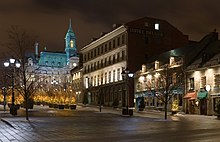
Choosing the appropriate 3D laser scanner is essential for efficient scanning. Variables to consider consist of range, resolution, and mobility. Determining the range the scanner needs to cover is necessary; for huge building sites, long-range scanners are excellent, whereas for detailed details in smaller sized locations, short-range scanners are sufficient. Greater resolution scanners provide even more information yet may call for even more handling power and time. For projects calling for activity in between several locations, a light-weight and mobile scanner is advantageous. In Montreal, where projects may range from historic structure conservation in Old Montreal to modern skyscraper building and construction midtown, having a flexible scanner can fit diverse needs.
Preparation Your Scanning Workflow
Efficiency in 3D laser scanning begins with precise preparation. Pre-scan preparation entails carrying out a website browse through to recognize the layout, identifying key locations to scan, and establishing the optimum positions for the scanner. Making certain sufficient overlap between scans promotes seamless sewing of factor clouds, particularly crucial in intricate atmospheres. Thinking about lighting and climate condition is also important, as they can impact scan top quality; overcast days are optimal for outside scans to minimize shadows.
Leveraging Professional Expertise
While 3D laser scanning technology is easy to use, optimizing its prospective commonly calls for specialist proficiency. In Montreal, numerous companies specialize in 3D laser scanning services. Working together with professionals can make certain optimum data capture, reliable data processing, and adherence to sector standards and local regulations. Professionals can readjust scanner settings and techniques to attain the most effective outcomes, accelerate the conversion of point clouds into functional 3D designs, and make sure conformity with pertinent criteria.
Using Advanced Software Application Devices
The information caught by 3D laser scanners is only comparable to the software application made use of to refine and examine it. Advanced software application tools supply capabilities such as point cloud processing, modeling and evaluation, and partnership. Software like Autodesk ReCap or Faro SCENE can handle large datasets, line up numerous scans, and get rid of noise. Tools like AutoCAD, Revit, or SolidWorks can convert point clouds right into precise 3D models, appropriate for different applications. Cloud-based systems help with partnership among stakeholders, permitting real-time updates and common accessibility to models.
Carrying Out Efficient Data Management
Taking care of the huge amounts of information created by 3D laser scanning is essential for preserving performance. Durable storage space options that can take care of big datasets are needed, with cloud storage offering scalability and remote accessibility. Creating an organized approach to arranging factor clouds, designs, and related files simplifies retrieval; regular naming conventions and metadata usage are key. Normal back-ups and safety and security steps protect versus information loss and unapproved gain access to.
Focusing on Training and Education and learning
Continuous training makes certain that your team stays skilled with the most up to date developments in 3D laser scanning technology and software. Participating in industry conferences and workshops in Montreal can keep experts updated on new techniques and tools. On-line programs on platforms like Coursera, Udemy, and LinkedIn Learning offer training on 3D scanning and relevant software application. Normal internal training sessions attend to particular job demands and obstacles, making sure recurring proficiency.
Prioritizing Quality Control
Quality control is essential to make sure the accuracy and reliability of 3D laser scanning results. Routinely validating scans against understood dimensions makes sure precision, and determining and dealing with any type of mistakes or inconsistencies in the point clouds or models is important. Extensive paperwork of scanning treatments, setups, and results is important for future recommendation and maintaining high requirements.
Promoting Partnership Amongst Stakeholders
3D laser scanning projects often entail multiple stakeholders, consisting of customers, architects, engineers, and contractors. Efficient cooperation enhances performance. Integrated systems that permit all stakeholders to gain access to and communicate with the 3D models promote this procedure. Normal conferences to go over progress, address issues, and choose based upon the 3D data guarantee smooth project monitoring. Clear and constant interaction avoids misconceptions and maintains everybody lined up.
Checking Out Cutting-edge Applications
Exploring cutting-edge applications of 3D laser scanning can give added worth past standard usages. Integrating 3D models with virtual reality (VIRTUAL REALITY) and augmented reality (AR) can boost visualization and preparation, offering immersive experiences for stakeholders. Including 3D laser scanning data into Building Information Modeling (BIM) systems improves control and effectiveness in building and construction tasks. Creating digital twins—-- virtual replicas of physical properties—-- enables real-time monitoring, predictive maintenance, and lifecycle management.
Remaining Enlightened About Regional Fads and Laws
Montreal has unique building and regulative factors to consider that can affect 3D laser scanning projects. Remaining informed regarding local patterns and laws is necessary. For projects involving historic buildings, sticking to guidelines set by Heritage Montreal and other conservation organizations is vital. Guaranteeing compliance with the most recent building regulations and guidelines in Quebec is essential for all building and construction tasks. Taking into consideration environmental sustainability in your scanning practices aligns with Montreal’s commitment to green efforts.
Verdict
3D laser scanning is a powerful device that provides numerous advantages throughout numerous markets in Montreal. By selecting the ideal devices, intending workflows, leveraging professional know-how, utilizing innovative software application, and carrying out effective data management practices, organizations and specialists can maximize the efficiency and accuracy of their 3D laser scanning projects. Training, quality control, stakeholder collaboration, cutting-edge applications, and staying informed concerning regional fads and laws better enhance the possibility of 3D laser scanning. As Montreal continues to grow and progress, embracing this innovation can lead to more effective and impactful projects, maintaining the city’s abundant history while promoting modern-day development. By following these suggestions, professionals in Montreal can not only enhance their efficiency yet also add to the development of their particular fields, making certain that the city remains at the center of advancement and excellence.