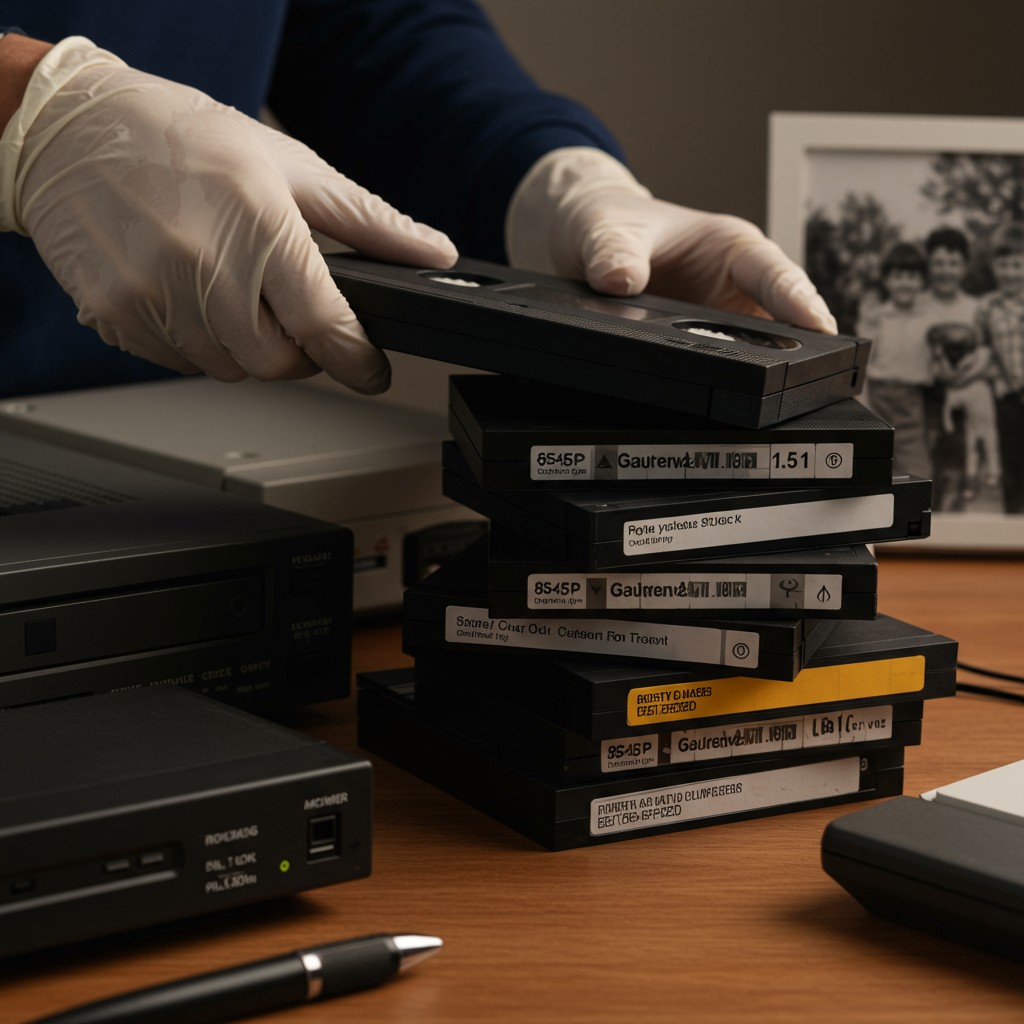
Factors to Consider When Selecting a Service Provider
As a round up, VHS tapes are an important part of our history, preserving memories and moments that we cherish dearly. However, with time and wear, these tapes can become worn out or even damaged beyond repair. This is where VHS to digital conversion services come in. They offer the best way to preserve your memories and turn them into digital format that can be easily accessed and shared. But how do you find the right service provider? Here are some factors to consider:
1) Quality: The quality of the final digital copy is paramount when converting your VHS tapes. Look for a service provider who uses high-quality equipment to ensure that every detail from the original tape is captured accurately. Also, check for any additional features such as noise reduction or color correction which can further enhance the overall experience. 2) Turnaround Time: If you have a particular deadline or event coming up, it's essential to choose a service provider who offers timely delivery without compromising on quality. Ask about their average turnaround time and whether they offer rush services if required. 3) Pricing: Compare pricing structures between different providers before making your decision. Ensure that there are no hidden costs or fees added later on in the process (e.g., per tape or per hour charges). Also, check if there are any discounts available for bulk orders or loyalty programs for returning customers. 4) Customer Reviews: Read reviews from previous clients to gain insight into their experiences working with different providers in Brisbane - this will help you make an informed decision about who best suits your needs and expectations. In effect this means, selecting a reliable VHS to digital conversion service is crucial in safeguarding your precious memories against degradation and loss; therefore always consider factors like quality assurance, turnaround time, pricing structure, and customer feedback before choosing one.
The VHS to digital conversion process can seem daunting, but here's a breakdown of what to expect, whether you're doing it yourself or hiring a professional service:
1. Pre-Conversion Prep:
- VHS Tape Condition:
- Inspection: Check your VHS tapes for physical damage like mold, tears, or a warped case. Mold is a big problem and can damage equipment. If you see mold, consider professional cleaning first.
- Test Play: If possible, test play a short section of each tape. This can reveal issues like tracking problems, audio dropouts, or color bleeding. Knowing these problems ahead of time helps manage expectations.
- Labeling: Clearly label each tape with its contents (e.g., "Birthday Party 1995," "Wedding Reception"). This is essential for organizing your digital files later.
- Equipment (DIY):
- VCR: You'll need a working VCR. Ideally, use the best quality one you have. If you haven't used it in a while, give it a good cleaning.
- Capture Device: This is the crucial piece of hardware that transfers the video signal from the VCR to your computer. Common types include:
- USB Capture Devices: These are generally affordable and easy to use. Look for ones that support composite (yellow/red/white RCA cables) or S-Video connections. S-Video generally provides a slightly better picture.
- Internal Capture Cards: These cards are installed directly into your computer. They can offer higher quality and more advanced features but are more complex to set up.
- Computer: You'll need a computer (desktop or laptop) with sufficient storage space to hold the converted video files. A fast processor and adequate RAM will speed up the conversion process.
- Cables: You'll need the appropriate cables to connect the VCR to the capture device (e.g., RCA cables, S-Video cable).
- Software: You'll need video capture software. Many capture devices come with basic software. More advanced software offers better control over settings and editing features.
- Professional Service Prep:
- Organization: Gather your VHS tapes and organize them in the order you want them converted.
- Labeling: Clearly label each tape as mentioned above. Provide any specific instructions to the service (e.g., "Start at 10 minutes in," "Omit the last 5 minutes").
- Choosing a Service: Research different conversion services. Consider their pricing, turnaround time, resolution options, and customer reviews. Ask about their equipment and processes to ensure they use quality methods.
2. The Conversion Process:
- DIY:
- Connect the VCR to the Capture Device: Use the appropriate cables to connect the VCR's output to the capture device's input.
- Connect the Capture Device to the Computer: Plug the capture device into your computer via USB or install the internal capture card.
- Install and Configure Software: Install the capture software and configure its settings. Important settings include:
- Input Source: Select the correct input (e.g., composite, S-Video).
- Video Format: Choose a video format (e.g., MP4, AVI, MOV). MP4 is generally the best choice for compatibility and file size.
- Resolution: VHS resolution is limited (around 240 lines). Capturing at a higher resolution (like 720p or 1080p) won't improve the image quality; it will only increase the file size. Capturing at the original resolution or slightly upscaling to 480p is often recommended.
- Audio Settings: Ensure the audio is being captured correctly.
- Start Recording: Play the VHS tape in the VCR and start recording in the capture software.
- Monitor and Adjust: Monitor the recording process. If you see any issues (e.g., tracking problems), try adjusting the VCR's tracking control.
- Stop Recording: When the tape finishes playing, stop the recording in the capture software.
- Repeat: Repeat steps 4-6 for each VHS tape.
- Professional Service:
- Drop Off or Ship: Drop off your tapes at the service's location or ship them according to their instructions.
- Conversion: The service will convert your tapes using their equipment and processes.
- Quality Check: Reputable services will perform a quality check to ensure the converted files are acceptable.
- Delivery: The service will deliver the converted files to you on a DVD, USB drive, or via online download.
3. Post-Conversion Processing:
- File Naming and Organization: Rename your digital files with descriptive names (e.g., "Birthday Party 1995_Part1.mp4"). Organize the files into folders based on date, event, or subject.
- Editing (Optional): Use video editing software to trim unwanted footage, add titles, correct color, or improve audio. Free options like DaVinci Resolve (free version) or OpenShot are good starting points.
- Storage and Backup:
- Multiple Backups: Create multiple backups of your digital files. Store them on different devices (e.g., external hard drive, cloud storage).
- Cloud Storage: Services like Google Drive, Dropbox, and OneDrive offer cloud storage options for backing up your videos.
- Archival Storage: Consider using archival-grade storage media (e.g., M-DISC) for long-term preservation.
- Sharing (Optional): Share your videos with family and friends via social media, email, or online video platforms.
Key Considerations and Potential Issues:
- Time Investment: Converting VHS tapes can be time-consuming, especially if you're doing it yourself.
- Image Quality Limitations: VHS is a low-resolution format. Don't expect the converted videos to look like modern HD video.
- Copyright: Be mindful of copyright laws. You should only convert VHS tapes that you own or have permission to convert.
- Tracking Problems: Tracking problems can cause blurry or distorted video. Adjusting the VCR's tracking control may help.
- Audio Issues: Audio dropouts or distorted audio can occur. Make sure the audio is being captured correctly in the software.
- Equipment Failure: VCRs and capture devices can fail. Have a backup plan in case of equipment failure.
- Cost (Professional Service): Professional conversion services can be expensive, especially for a large number of tapes.
- Service Quality: Not all conversion services are created equal. Research and choose a reputable service.
- File Corruption: Digital files can become corrupted. Regularly check your backups to ensure they are working.
Choosing DIY vs. Professional Service:
- DIY:
- Pros: Lower cost, more control over the process, can be a fun project.
- Cons: Time-consuming, requires technical skills, risk of equipment failure, potential for lower quality results.
- Professional Service:
- Pros: Saves time and effort, often higher quality results, access to professional equipment and expertise.
- Cons: Higher cost, less control over the process, requires trusting a third party with your valuable tapes.
By understanding the VHS to digital conversion process, you can make informed decisions about whether to do it yourself or hire a professional service, and you can manage your expectations for the final results. Good luck!